Non-Generic Reposiory pattern vs Generic Reposiory pattern
01. NON-GENERIC REPOSITORY
(one repository per Entity): Custom repository class for each entity, eg: UserRepository, EmployeeRepository.
02. GENERIC REPOSITORY
(one repository for all Entity): Is an implementation of Repository pattern that allows us to create a single repository that can be used for multiple entities. Instead of writing sperate repositories for each entity, GR uses a single class with Generic type T parameter to handle CRUD. Simplifies DAL by reducing duplicate logic.
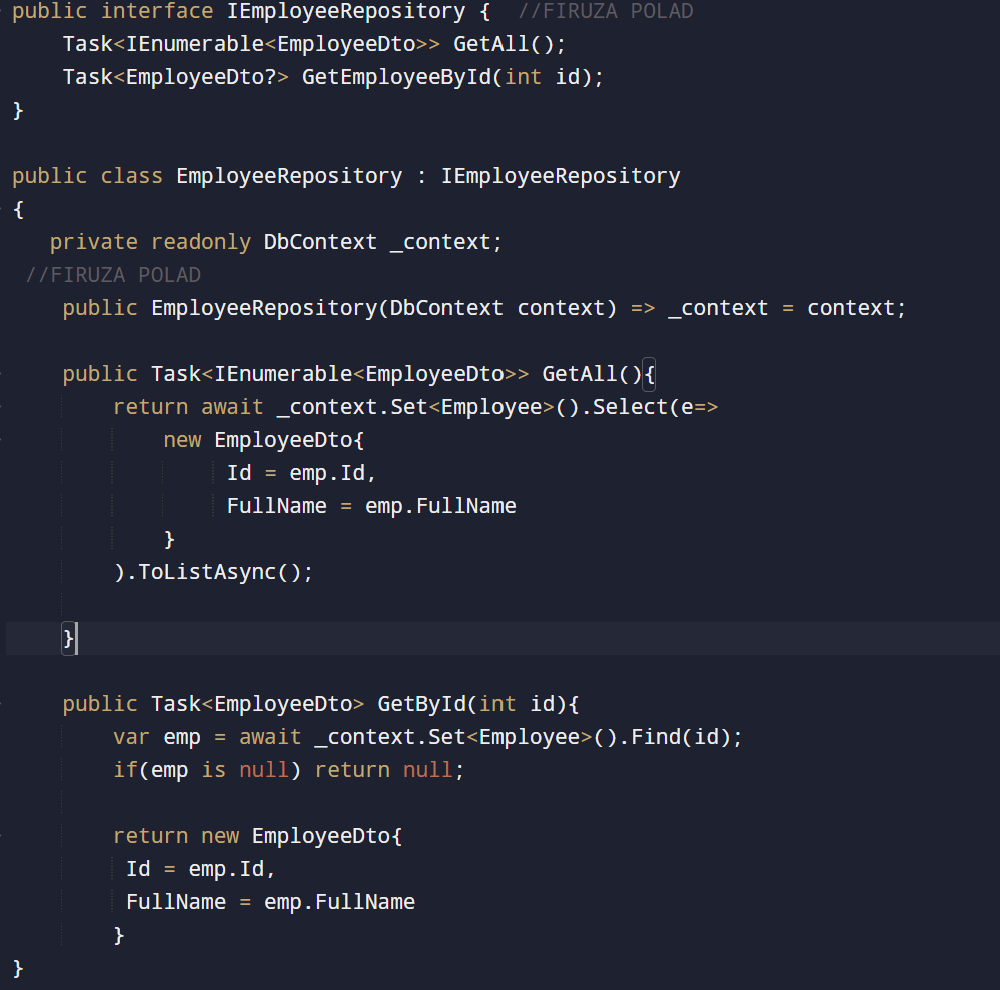
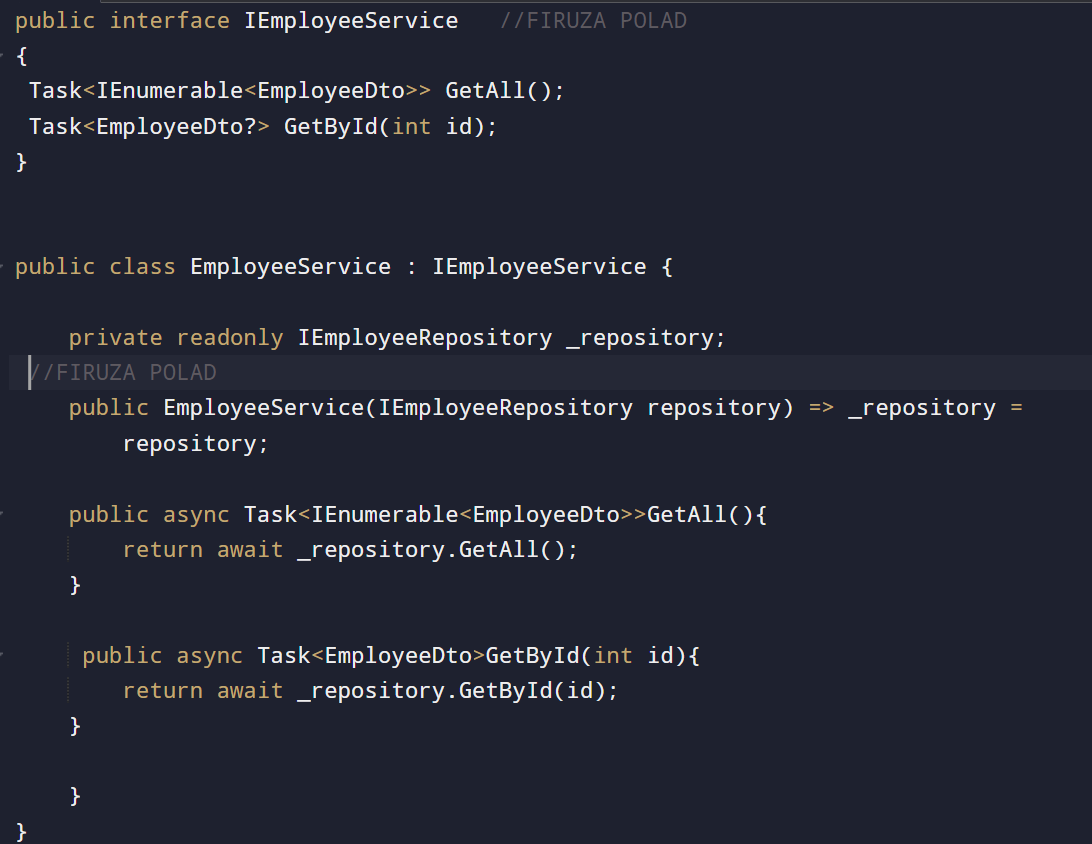
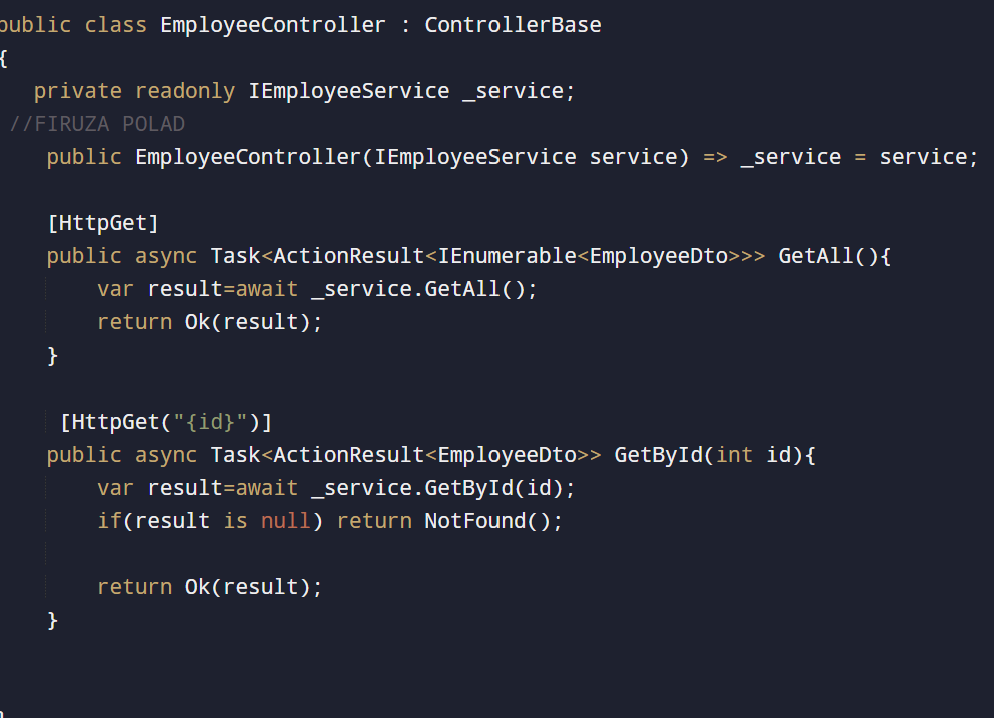
Code Example for Non-Generic Reposiory pattern
Controller (API Layer): Handles incoming HTTP requests and routes them to the appropriate
service methods. It acts as a bridge between the client (frontend) and the BL. Example: GET
`/api/employees/{id}` calls `EmployeeService.GetById(id)`.
Service (Business Logic Layer): Contains the core business logic and coordinates between
the controller and the repository. Validates input, applies rules, and processes data before
passing to/from the data layer.
Repository (Data Access Layer): Handles all interactions with the database. Encapsulates
querying, inserting, updating, and deleting data. It allows services to work with data without
knowing the source
Entity + DTO:
- Entity: Represents the real database model (e.g., `Employee`) used with EF Core.
- DTO (Data Transfer Object): A simplified version of Entity for transferring data
between layers, especially to/from API.
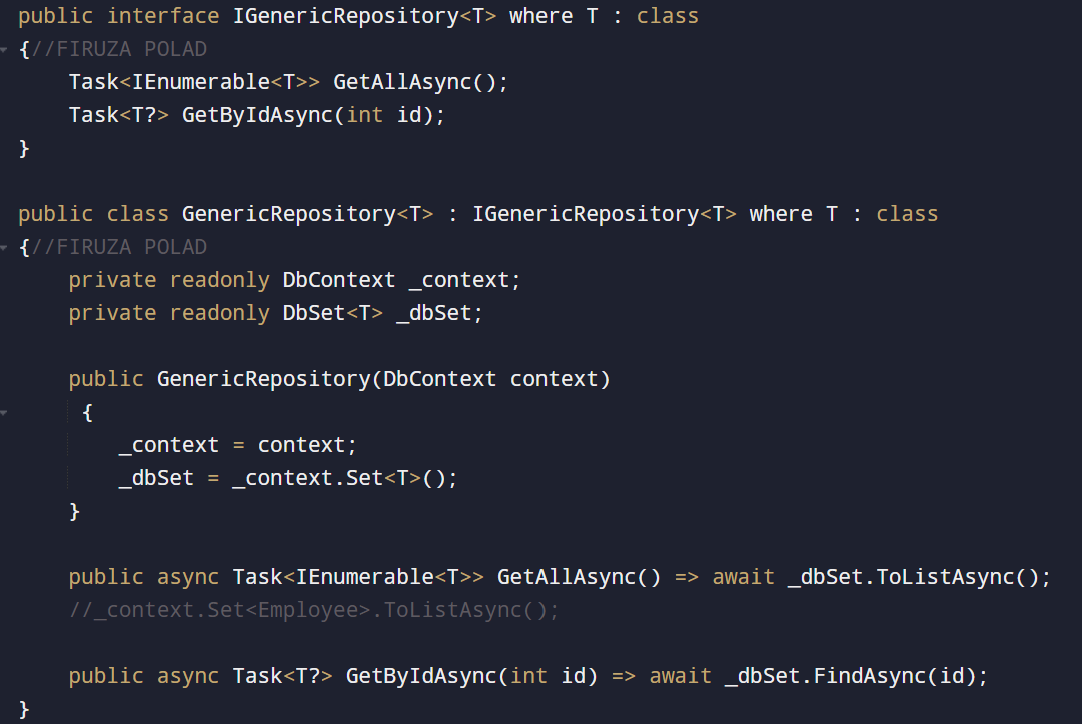
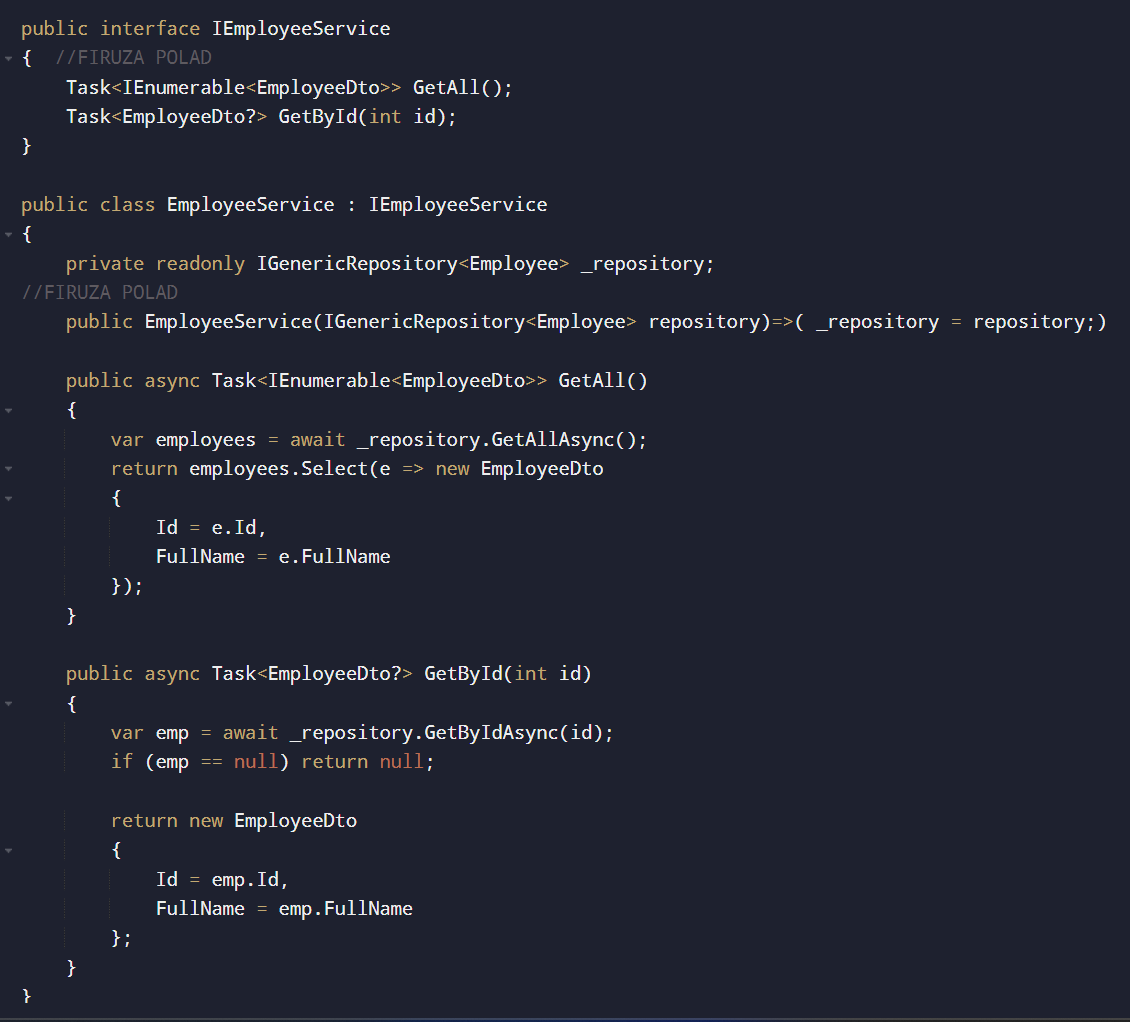
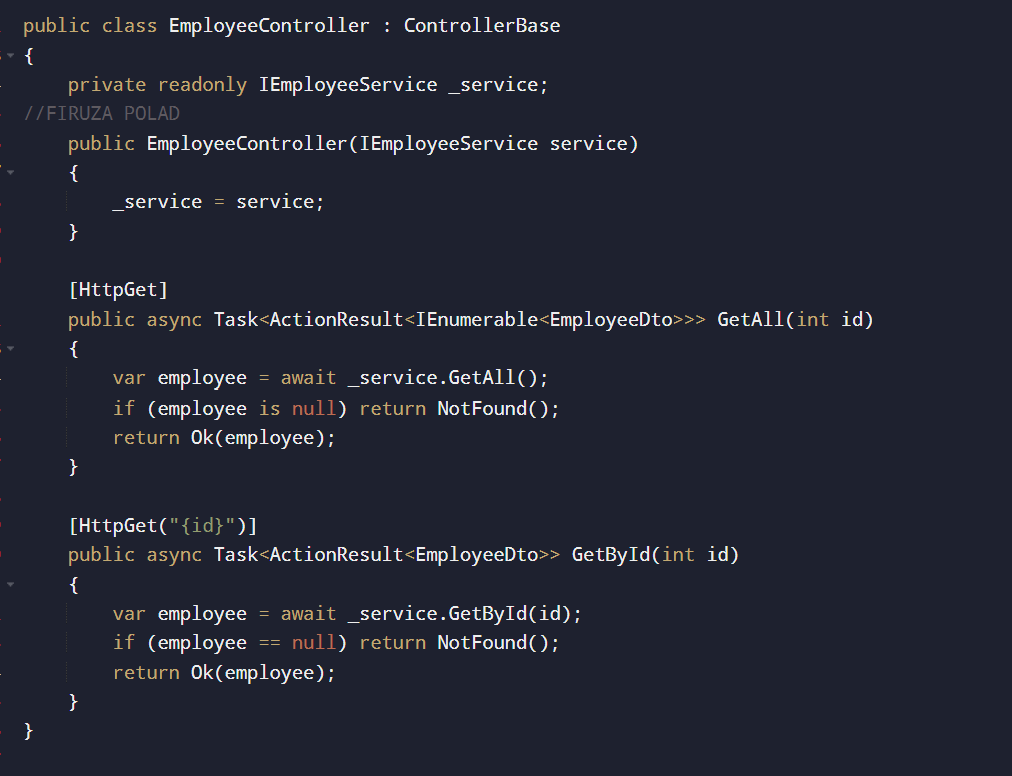
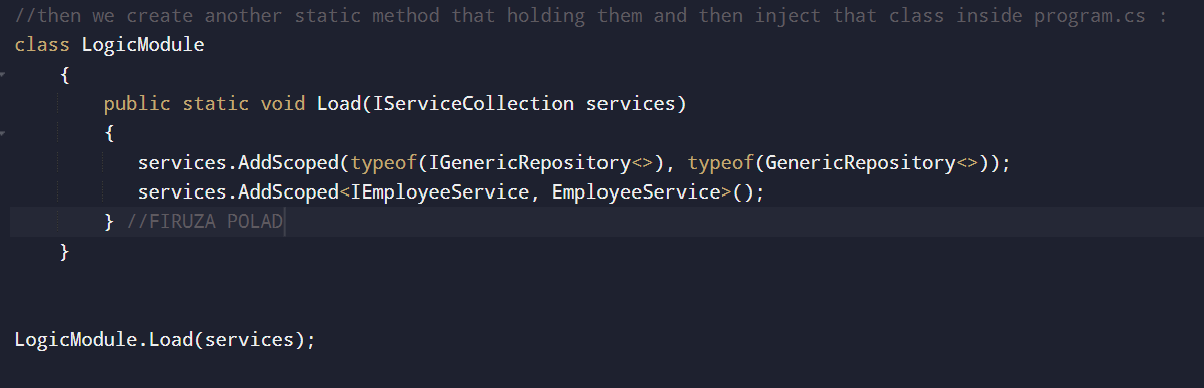
Code Example for Generic Reposiory pattern
Controller (API Layer): This is the entry point of your application. It handles HTTP
requests and responses. Calls methods from the Service Layer to execute business logic
Service (Business Logic Layer): Contains business logic and rules for handling
application operations. Interacts with the Generic Repository to get or manipulate data.
Repository (Data Access Layer): Generic Repository handles all CRUD operations for any
entity. You do not write a separate repository for each entity, ensure DRY principle.
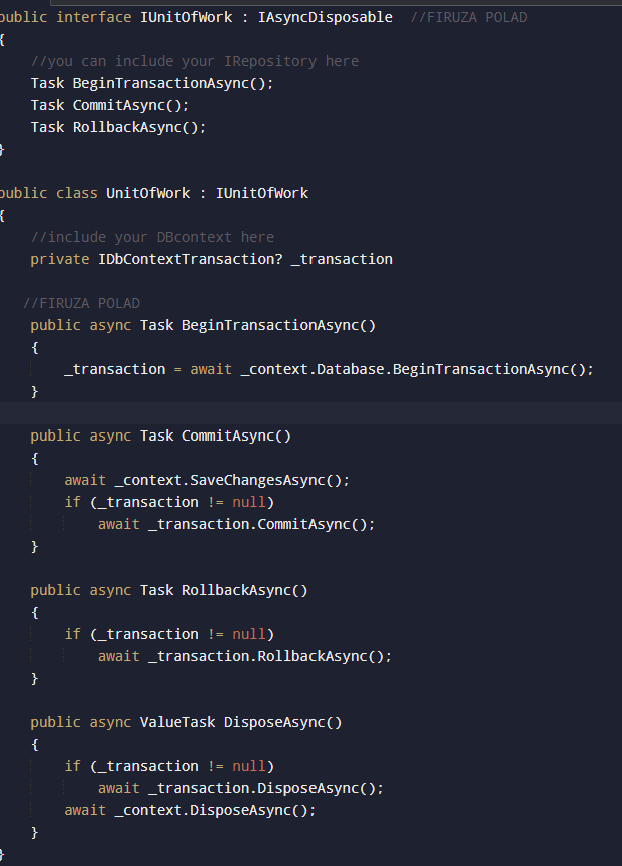
Unit Of Work
Used to manage changes to multiple entities in a DB as a single Transaction (operation). If we want to implement transaction while using EF and RP, then UOF can be effective implementation of RP.
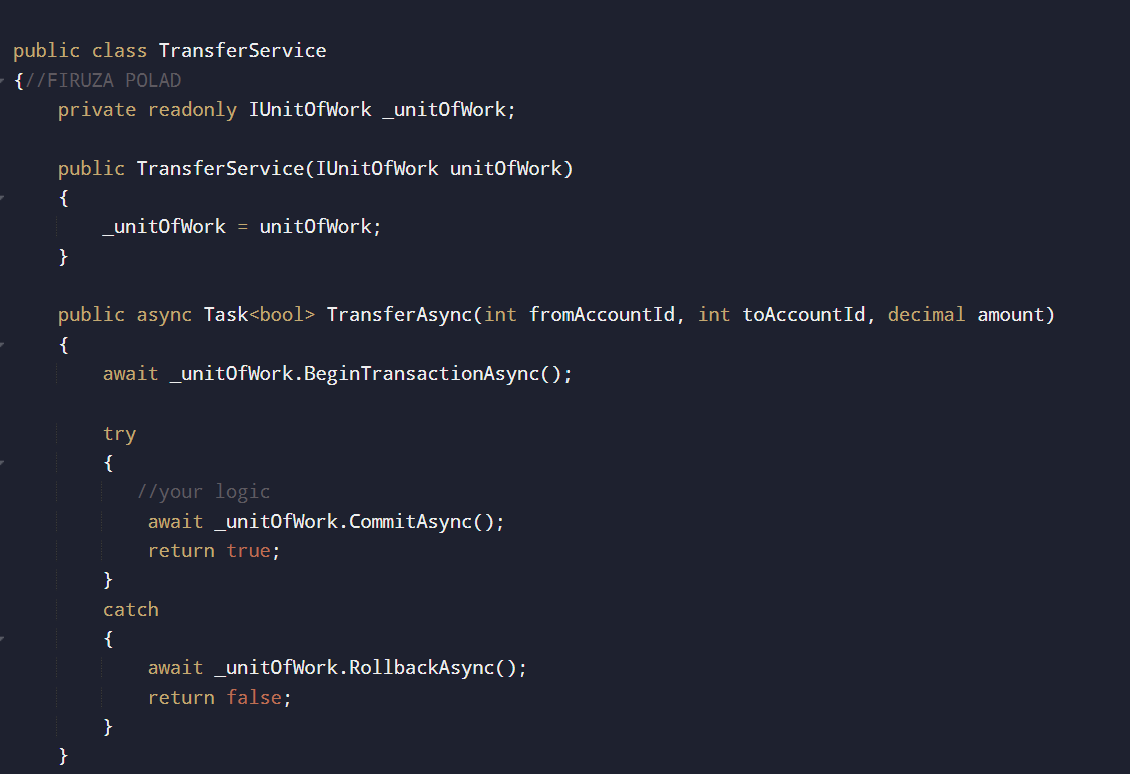
eg2: we have 2 account A (for debit card) and B (for credit card), money subtract from A and added to B, both must succeed together...
eg3: in application that interact with DB , we might be making multiple changes , such as update profile while sending notification. The UOW group these changes together...
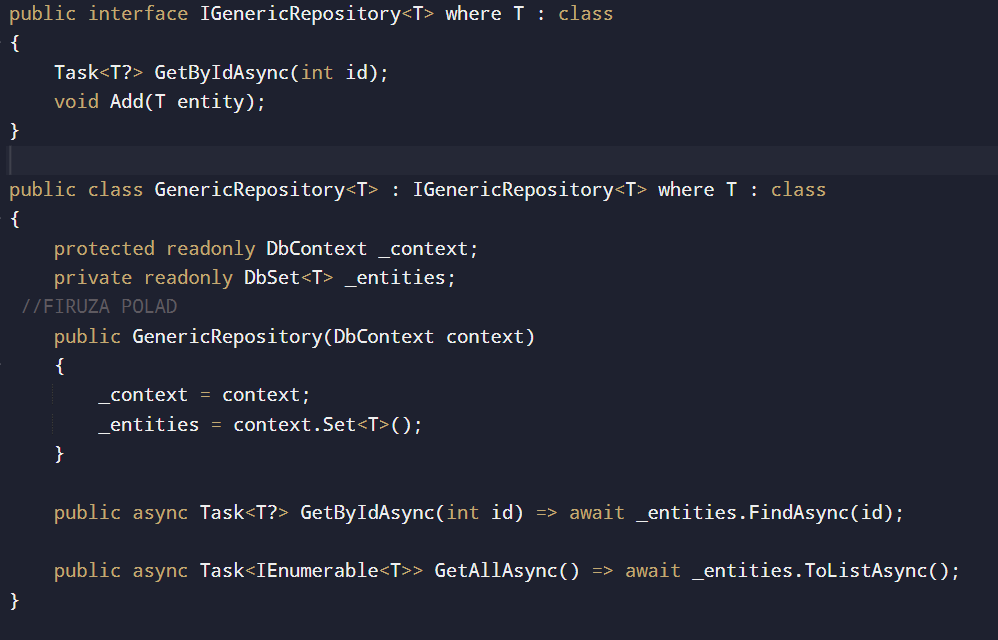
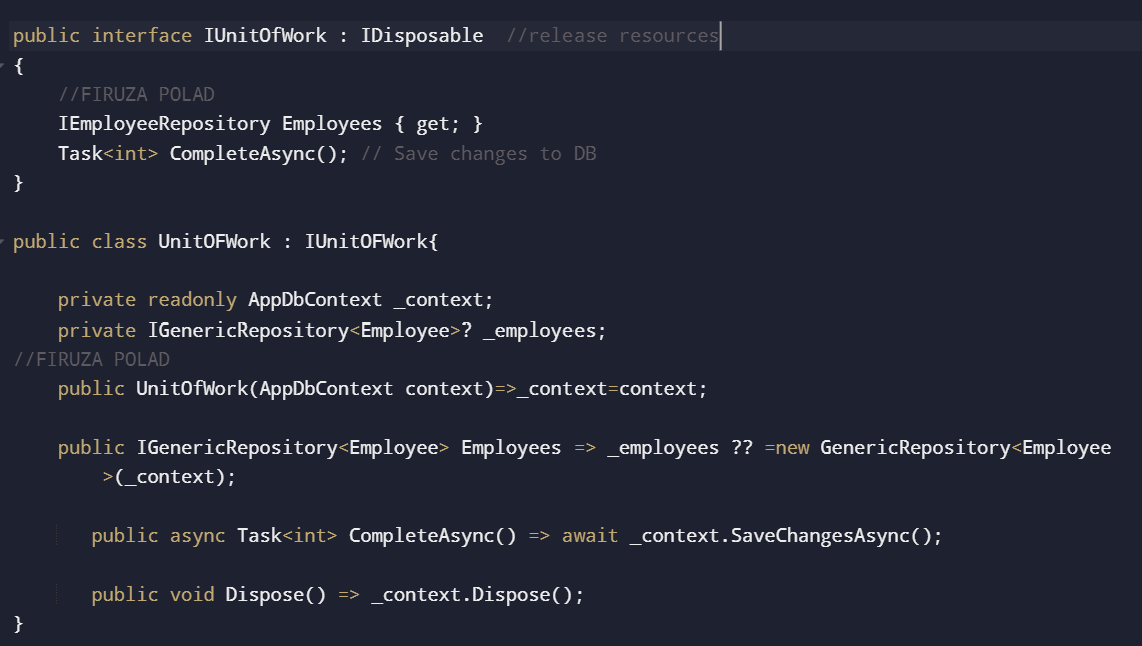
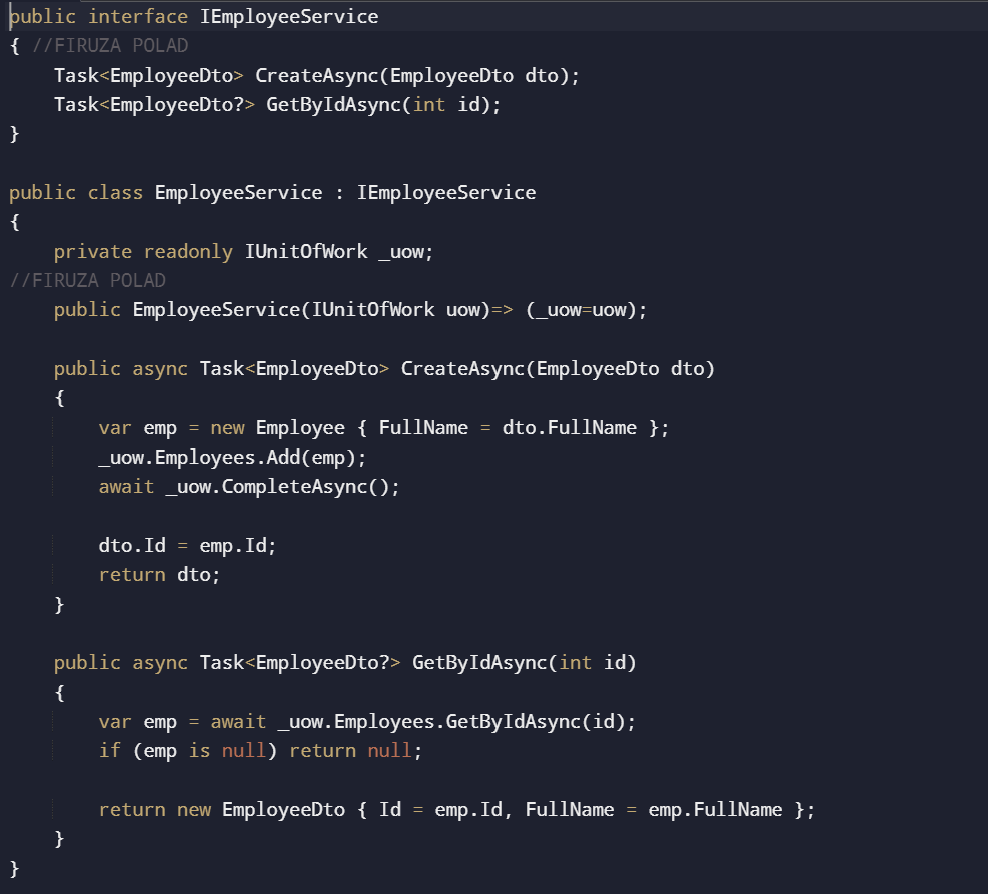
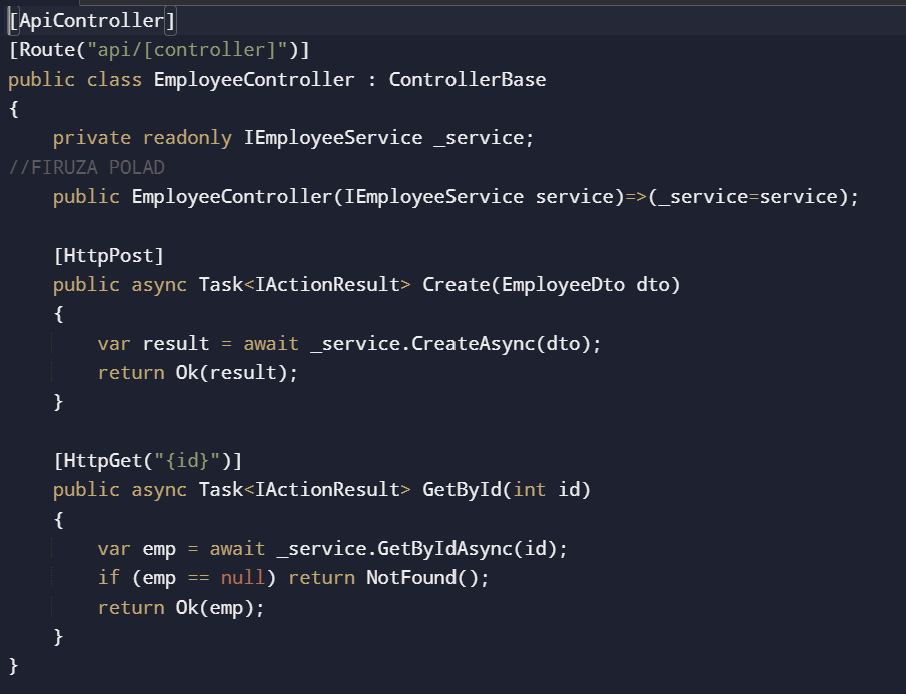
Code Example for UOW
Controller (API Layer): Entry point handling HTTP requests/responses.
Service (Business Logic Layer): Uses UoW to coordinate multiple repository
operations.
Repository (Data Access Layer+UOW): Repositories don’t call SaveChanges() directly.
Instead, they only perform data operation. The Unit of Work will call SaveChanges() once.
Transaction (ACID)
- Atomicity: all operation are completed successfully or non of them are...
- Consistency: DB start and end in a valid state after transaction...
- Isolation: transaction are like individual task that should not mixed...
- Durability: once transaction complete successfully , its result are permanent...
Code Example for Transaction
We want to transfer money between two accounts. If debit from Account A or credit to Account B fails, the transaction must roll back.